

In traditional Ayurveda, one of the oldest holistic health systems in the world, shilajit has played a special role for centuries. It is described there as a so-called rasayana substance —a term used to describe natural substances that, according to Ayurvedic beliefs, are said to support general well-being and promote inner balance.
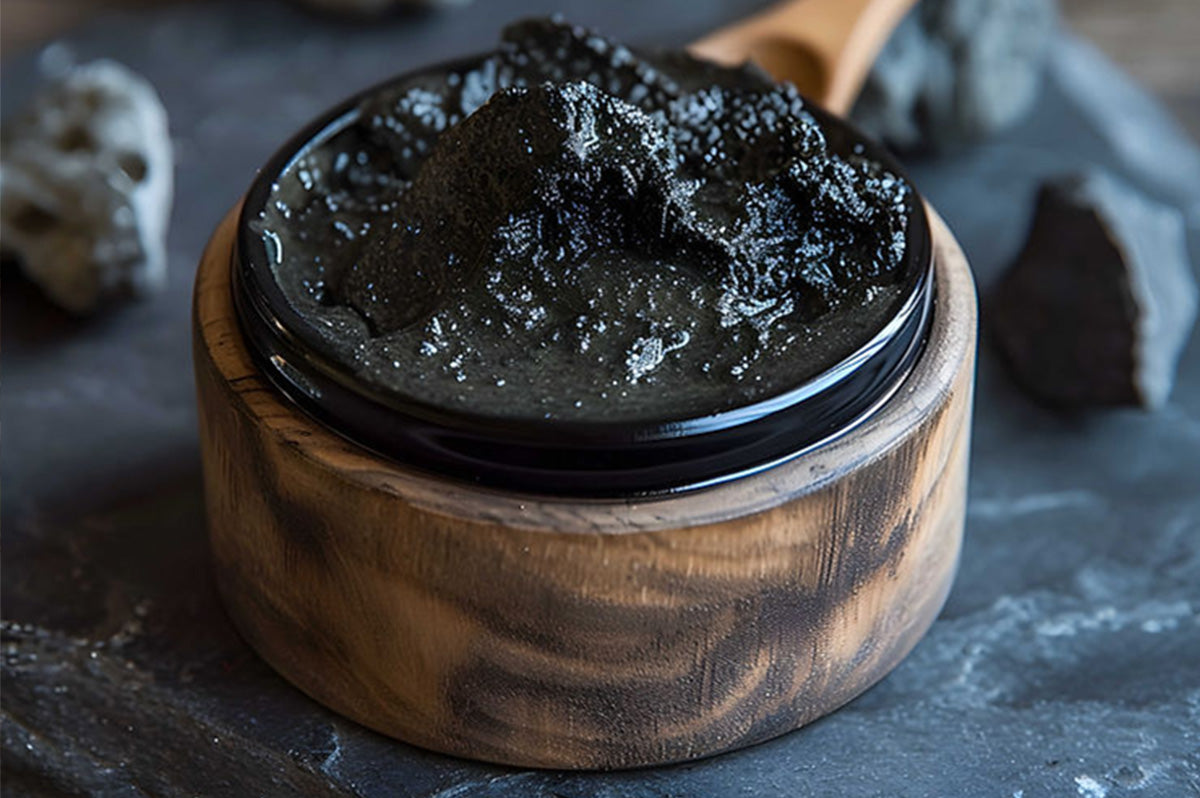
Shilajit, also known as mumijo, originates from the high mountain regions of the Himalayas. The natural resin naturally contains numerous minerals, including manganese, which contributes to normal energy metabolism and protects cells from oxidative stress.
1. Shilajit as Rasayana in Ayurveda
In Ayurveda, the term Rasayana refers to practices and natural substances intended to promote vitality and life energy. Shilajit is described in this context as an element used in traditional health teachings to harmonize body and mind.
The uniqueness of Shilajit lies in its natural origin: Over centuries, the resin has formed in rock layers in the Himalayan region. It is collected there, purified, and processed in its original form. In Ayurvedic practice, Shilajit is often used as part of the daily routine—for example, as a natural supplement to a balanced diet.
This application is traditionally based and is intended to promote a sense of balance and vitality. It is not a substitute for medical treatment and does not constitute a healing claim.
2. The balance of the doshas
A central tenet of Ayurveda is the balance of the so-called doshas – Vata, Pitta, and Kapha. These are described as the body's three basic energies. When they are in balance, a person is considered vital and in harmony.
Shilajit is mentioned in Ayurvedic literature as a substance that is said to help maintain this balance. This view is philosophically and culturally influenced and has no connection to Western medicine.
In modern use, the focus is therefore not on the healing effect, but on the idea of understanding Shilajit as a natural, mineral-containing product that naturally supplements the body – always within the framework of a conscious lifestyle.
3. Combining tradition and modern perspective
While shilajit has been valued in Ayurveda for centuries, interest in its composition and origin is also growing in the West. Today, particular attention is paid to transparency, laboratory analyses, and purity—especially in Switzerland, where quality standards are high.
Modern research is investigating individual components of shilajit, particularly manganese, which has been scientifically proven to contribute to energy metabolism and protect cells from oxidative stress. This combines traditional experience with modern science.
Shilajit from Mumio is tested for quality and purity in Switzerland and comes from the Himalayan mountains. It represents a combination of authenticity, natural origin, and certified Swiss quality – entirely in keeping with the Ayurvedic principle of keeping body and mind in balance.
Conclusion
Shilajit—or mumijo—has been an integral part of Ayurvedic tradition for centuries. It symbolizes vitality, naturalness, and balance. While its traditional significance is deeply rooted in Indian healing, the modern focus is on quality, origin, and laboratory testing. Thus, shilajit remains a fascinating natural product that connects past and present—not as a remedy, but as an expression of natural purity and balance.


Leave a comment
This site is protected by hCaptcha and the hCaptcha Privacy Policy and Terms of Service apply.