

Anyone new to Shilajit quickly encounters a second term: Mumijo. The obvious question: Are these different products? Are there quality differences? Or are they simply the same natural substance?
The answer is simple. You can find the full context in the Shilajit Guide.
Mumijo and Shilajit – what's behind the terms?
Mumijo and Shilajit refer to the same natural mineral resin that forms over centuries in rock crevices of high mountains like Gilgit-Baltistan. "Shilajit" is the Indian Sanskrit term, "Mumijo" is the Central Asian-Russian name for the same natural product. Quality differences arise not from the name, but from origin, processing, and laboratory testing.
Shilajit – Origin from Sanskrit
"Shilajit" comes from Sanskrit. Literally translated, it means something like "conqueror of mountains" or "destroyer of weakness" – an allusion to the resin that seeps from rock crevices.
The term is primarily rooted in the Indian and Nepalese regions and has been passed down through millennia by Ayurvedic medicine. Today, "Shilajit" is the most commonly used term internationally – especially in the English-speaking market and in online searches worldwide.
Mumijo – the Central Asian term
"Mumijo" is the Central Asian and Russian-Eastern European name for the same natural resin. The term is widespread in Russia, Kazakhstan, and post-Soviet countries, and from there it has found its way into the German-speaking world.
In Switzerland and Germany, many users explicitly search for "Mumijo" – especially among the older generation who became familiar with the product through Eastern European sources.
Mumio – the brand spelling
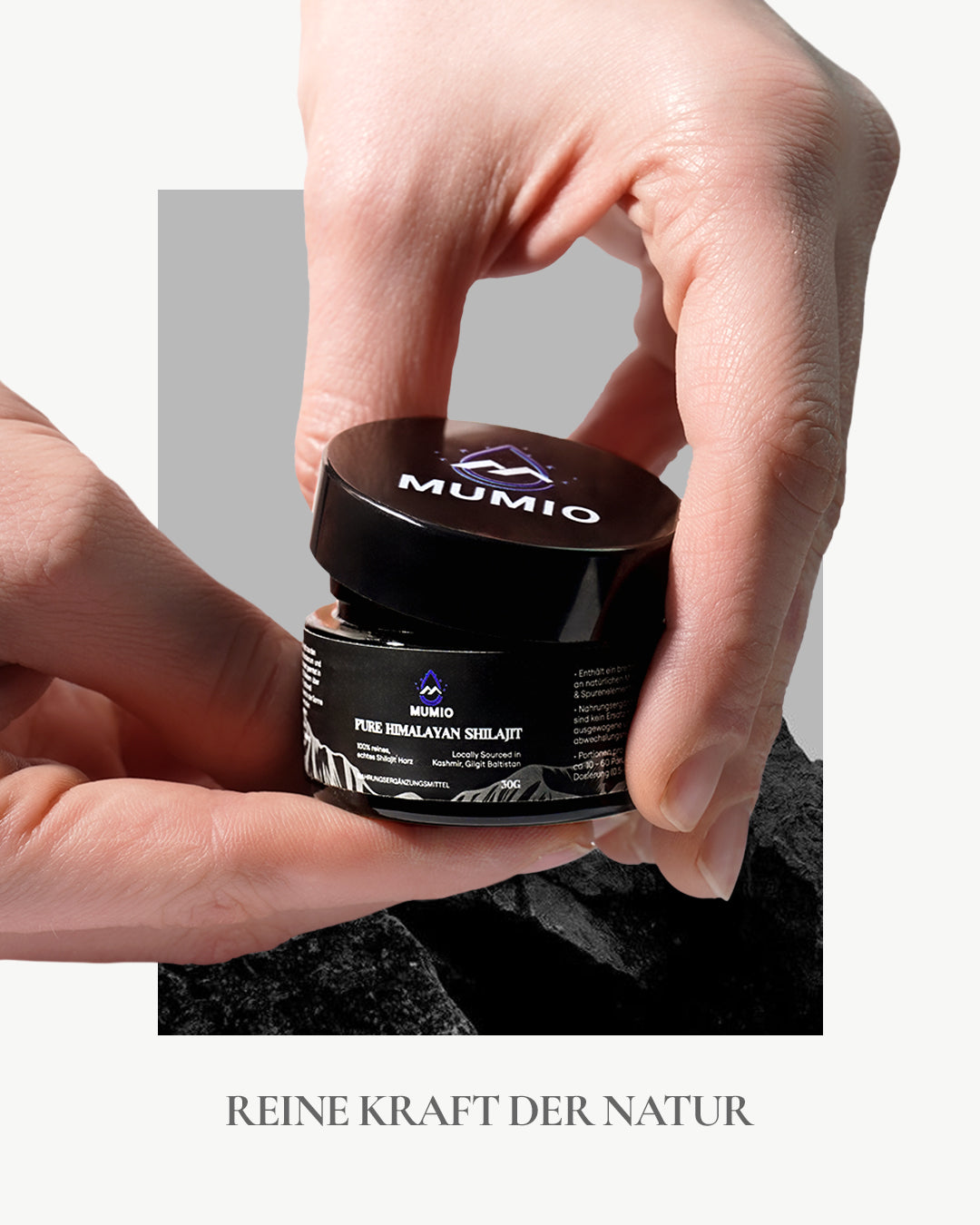
"Mumio" is the spelling variant used by the company Mumio as a brand name – based on "Mumijo," but simplified. The brand spelling serves to differentiate it in the market.
In terms of content, "Mumio Shilajit" means the same thing: natural mineral resin from Gilgit-Baltistan, laboratory-tested by Biolytix AG in Switzerland.
Are there quality differences between Mumijo and Shilajit?
No – not because of the name.
On the market, there are high-quality and inferior products under both designations. The name alone says nothing about the quality. Crucial factors are:
- Specific region of origin (e.g., Gilgit-Baltistan, not just "Himalayas")
- Gentle processing without extraction or enrichment
- Independent laboratory analysis with dated results
- Full batch transparency
Anyone looking for high-quality goods – whether "Mumijo" or "Shilajit" – should pay attention to these factors. How to recognize high-quality resin can be found here: recognizing real Shilajit.
Which term is more frequently searched for in Switzerland?
In the German-speaking world, both terms are common:
- "Shilajit" – more frequent in younger, internationally oriented search queries
- "Mumijo" – more common among German-speaking users, especially those with an affinity for natural healing topics
- "Mumio" – brand searches that directly refer to Mumio as a company
At mumio.ch, both terms are used consistently and naturally – without keyword stuffing, but with a clear orientation towards actual search behavior.
Frequently Asked Questions – Mumijo vs. Shilajit
Is Mumijo the same as Shilajit?
Yes. Both terms refer to the same natural resin: a mineral-rich, resin-like product that forms over centuries in rock crevices of high-mountain regions. The differences lie exclusively in the linguistic and geographical origin of the designations.
Why does Mumio write "Mumio" instead of "Mumijo"?
"Mumio" is the chosen brand spelling. It is based on "Mumijo" but simplified and made more memorable as a brand name. In terms of content, the product means the same thing.
Which name is correct?
Both are correct – in their respective contexts. "Shilajit" is the Sanskrit term of Indian origin, "Mumijo" is the Central Asian-Russian term. In Switzerland, both are understood and searched for.
Does the name say anything about the quality?
No. Neither "Shilajit" nor "Mumijo" in the product name guarantees quality. Quality results from origin, processing, and laboratory testing – regardless of what designation is on the packaging.
Conclusion
Mumijo and Shilajit are two names for the same natural product. The terms differ in linguistic and cultural origin – not in substance. What truly distinguishes high-quality from inferior products is always the same: origin, processing, laboratory testing.
If you are looking for Shilajit from Gilgit-Baltistan, laboratory-tested in Switzerland: Buy Shilajit Switzerland.

Leave a comment
This site is protected by hCaptcha and the hCaptcha Privacy Policy and Terms of Service apply.