
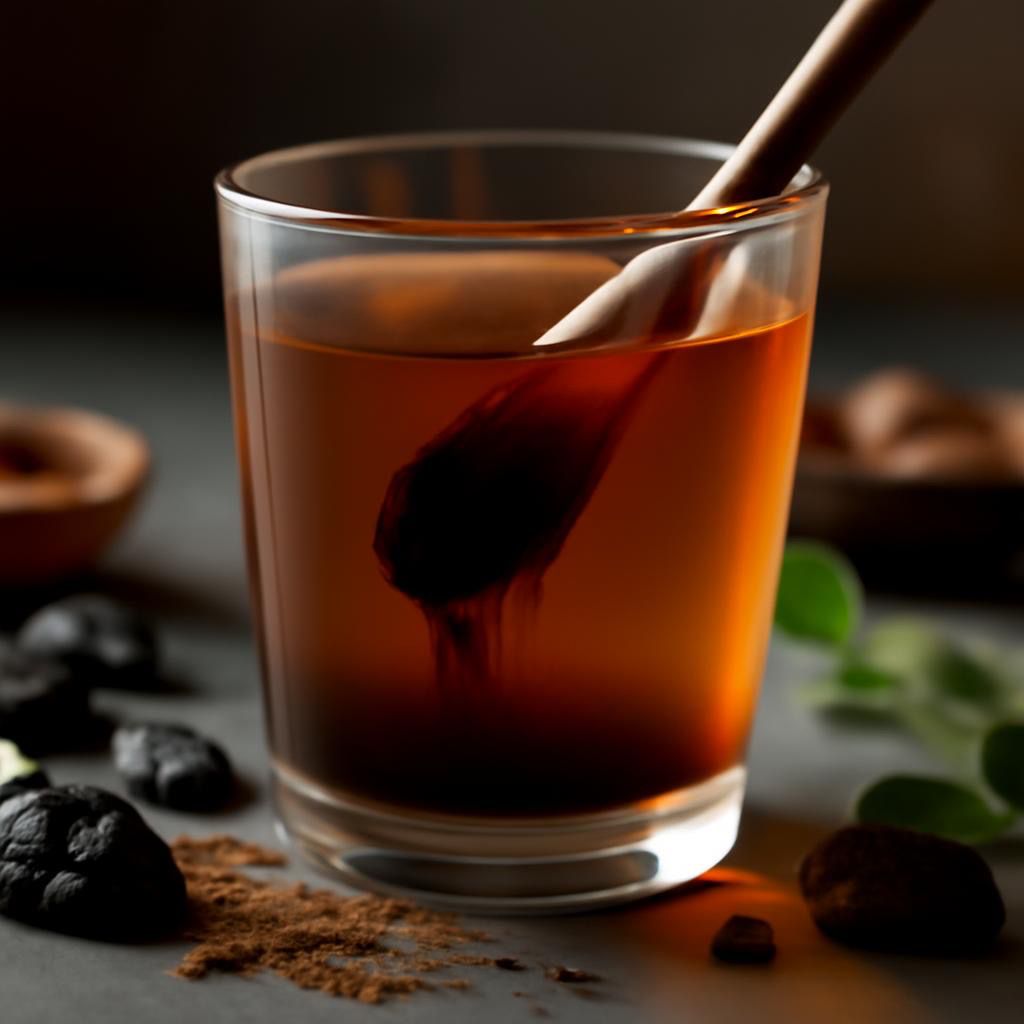
Shilajit is available in various forms: as resin, powder, capsule, or liquid extract. Mumio consciously offers only one form – the natural resin. This article explains why.
You can find all the basic information about the product in the Shilajit Guide.
What distinguishes Shilajit resin from other forms
Shilajit resin is the least processed form. Unlike powder or capsules, natural resin is not pulverized, heated, or mixed with excipients and additives. Its natural composition of manganese, fulvic acids, humic acids, and trace elements is fully preserved. Capsules and powders undergo more processing steps and often contain fillers.
Resin vs. Powder
Shilajit powder is created by drying and pulverizing the resin. This process:
- Alters the natural structure
- Increases susceptibility to oxidation (larger surface area)
- Often requires excipients or flow agents
- Loses its characteristic smell and taste
The result is a product that is convenient to transport – but further removed from the natural resin.
Resin vs. Capsules
Capsules usually contain powder – with all the aforementioned disadvantages. In addition:
- Capsule shell (gelatin or cellulose compounds)
- Standardized dosage, no individual adjustment
- Often magnesium stearate or other flow agents
For people who explicitly do not want animal products, gelatin is another issue.
Resin vs. Extract
Extracts are produced by chemical or thermal treatment to isolate or enrich certain active ingredients. The process:
- Fundamentally alters the natural composition
- Is not "natural" in the true sense
- Can leave solvent residues
Mumio completely foregoes extraction.
How resin is formed – and why less processing is more
Shilajit resin is hand-collected in Gilgit-Baltistan, gently cleaned in several steps, and concentrated. No chemical treatment, no high-temperature processes, no enrichment.
The result is a resin that comes directly from the mountains – with everything naturally contained within it. Cleaning removes foreign particles. The natural composition remains intact.
This is the opposite of "more processing = better product." In the case of Shilajit, less intervention means more authenticity.
Practical advantages of Shilajit in resin form
Resin is not only the most natural – it's also practical:
- Flexible dosage: You portion it yourself, pea- or rice-grain sized.
- Easy to take: Dissolves completely in warm water, tea, or milk.
- Long shelf life: Resin is stable and, if stored correctly, lasts a long time.
- No additives: No excipients, no preservatives, no capsule shell.
The only "hurdle": resin is a bit sticky. A small price for a significantly more natural way of consumption.
Why Mumio only offers resin
Mumio consciously decided against powders, capsules, and extracts. The reason:
The goal is a product that remains as close to nature as possible. Every additional processing step – pulverization, encapsulation, extraction – moves the end product further away from what originates in the rocks of Gilgit-Baltistan.
Naturalness is not a marketing statement. It is a decision against any unnecessary processing step.
What happens instead: manual collection, gentle cleaning, laboratory testing by Biolytix AG in Switzerland, bottling in glass.
How to recognize good resin: recognizing real Shilajit.
Frequently asked questions about Shilajit resin
How do I recognize good Shilajit resin?
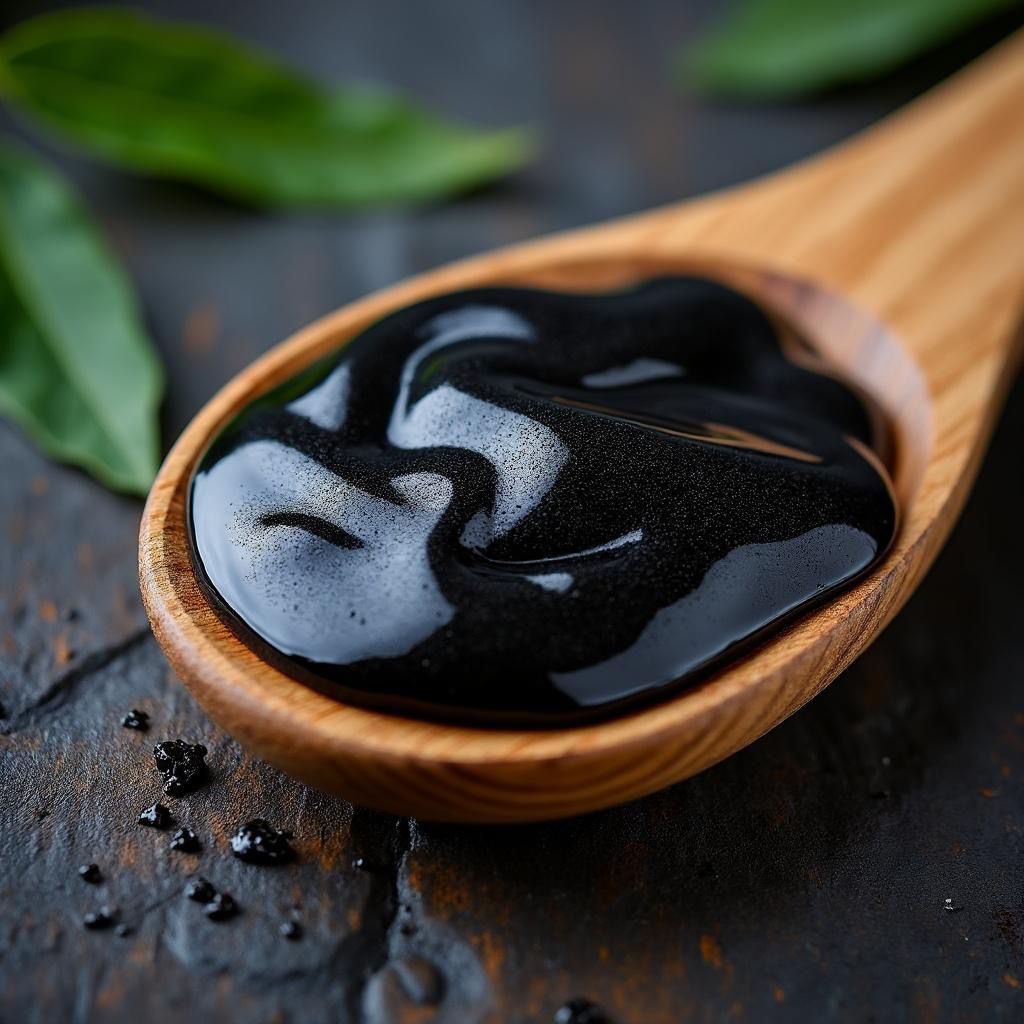
Good resin is dark brown to black, solid at room temperature, and soft when warm. It has an earthy, mineral-like smell and dissolves completely in warm water. Small natural inclusions are normal. The most important characteristic: an independent, dated laboratory report with heavy metal levels and a mineral profile.
How long does Shilajit resin last?
When stored correctly – cool, dark, airtight, not in the refrigerator – natural Shilajit resin lasts for several years. The best-before date on the packaging serves as a guide.
Does resin dissolve completely?
Yes, Shilajit resin dissolves completely in warm water (approx. 40–60°C). It dissolves less well in cold water. Very small mineral particles may remain – this is normal for natural resin and not a quality defect.
Does Shilajit resin smell unpleasant?
Shilajit has a characteristic, earthy, mineral-resinous odor. This is typical for the natural product and not a quality defect. Sweet, perfumed, or chemical smells, however, are warning signs.
Conclusion
Shilajit resin is the least processed, most natural form – without excipients, capsules, or extraction. Mumio exclusively offers resin because every additional processing step removes the product from its natural state.
Naturalness is not a marketing statement. It is a decision against any unnecessary processing step.
What happens instead: manual collection, gentle cleaning, laboratory testing by Biolytix AG in Switzerland, bottling in glass.
If you are looking for this natural resin: Buy Shilajit Switzerland.

Leave a comment
This site is protected by hCaptcha and the hCaptcha Privacy Policy and Terms of Service apply.