
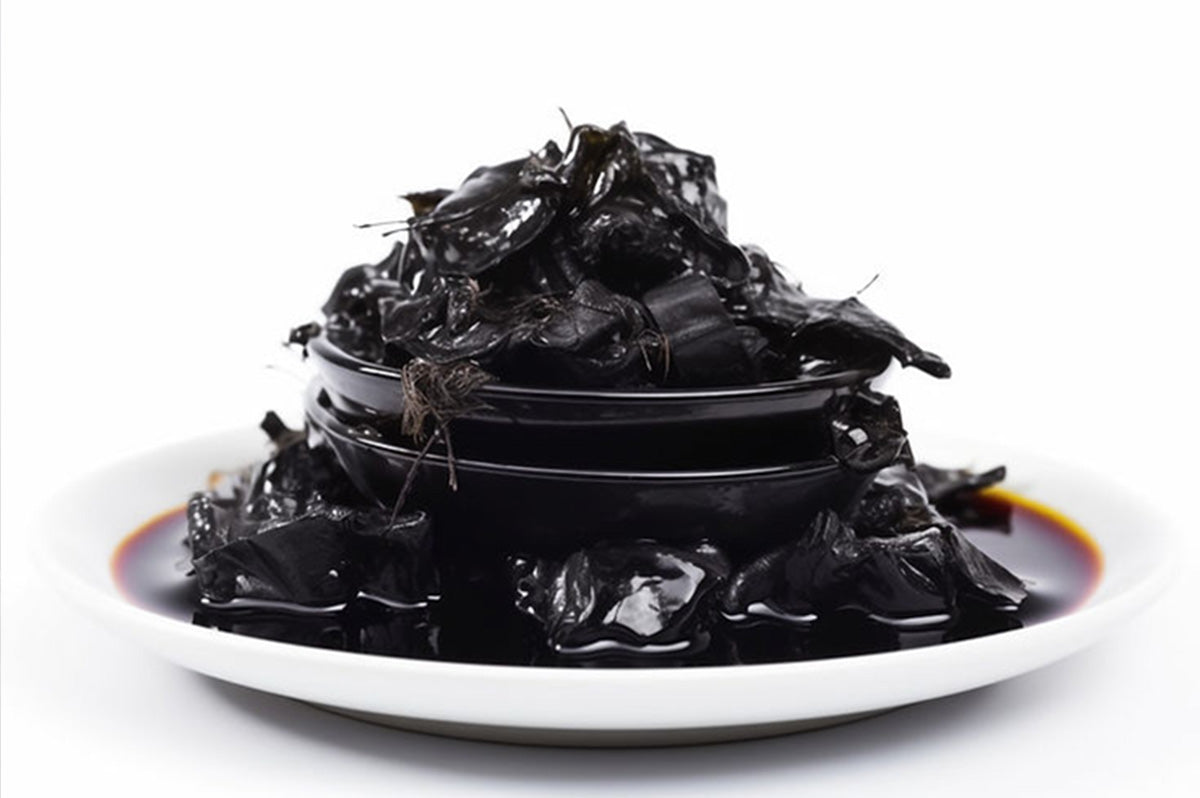
When buying high-quality shilajit, you're also buying the process behind it. How a resin is collected, purified, and further processed directly determines the final product – not the marketing on the packaging.
Here is Mumio's process, step-by-step. You can find the full context in the Shilajit Guide.
Step 1 – Hand Collection in Gilgit-Baltistan
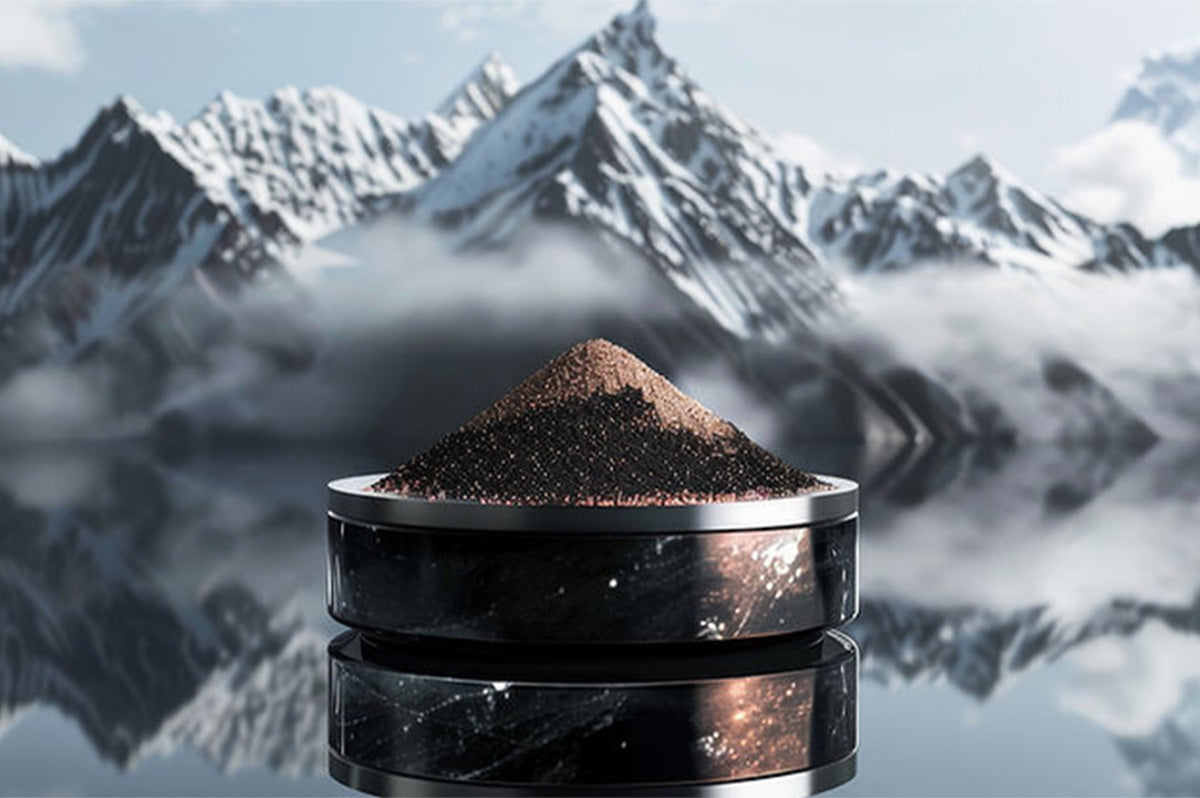
Shilajit naturally seeps from rock crevices at warmer temperatures. In Gilgit-Baltistan, Pakistan – at altitudes above 3,000 meters – this occurs during the summer months. Experienced collector families, who have passed down knowledge of collection sites for generations, carefully collect the raw resin by hand.
Mechanical extraction is neither possible nor justifiable. It would damage the delicate natural deposits. Every gram of Mumio Shilajit is the result of this manual, traditional work.
Step 2 – Gentle Purification Without Chemicals
After hand collection, Shilajit undergoes a multi-step gentle purification process. The raw resin is soaked in pure water, carefully filtered, and concentrated. No harsh chemicals, no high temperatures, no synthetic aids. The goal is to remove foreign particles and preserve the resin's natural composition.
What is removed during purification
- Sand particles and dust
- Coarse rock residues
- Organic foreign residues (plant residues that are not part of the resin)
What remains
- The natural mineral matrix of the resin
- Fulvic acids and humic acids
- The characteristic dark color and consistency
- Natural mineral inclusions that are part of its genesis
This distinction is crucial. Gentle purification is not a compromise – it is the prerequisite for a natural final product.
Step 3 – Over-filtered or natural?
Here lies one of the most important quality differences in the shilajit market.
The Problem of Over-filtration
Industrially heavily filtered shilajit often looks flawless: uniform color, smooth texture, no visible particles. This sounds like quality – but can mean the opposite.
Over-filtration can:
· Remove natural mineral components
· Alter the original texture and composition
· Create a visually perfect but less authentic product
The result is a product that looks good – but is no longer complete.
The Right Standard: Purity with Character
Natural shilajit is purified – but not perfected. Small natural inclusions, slight inhomogeneity, characteristic smell: these are signs of minimal processing.
At Mumio, the goal lies between these extremes: undesirable impurities are reliably removed. The natural structure is preserved. The resin remains as close as possible to its original form.
Step 4 – Independent Laboratory Testing Before Release
After purification, Mumio Shilajit is not directly shipped. Each batch is first independently tested by Biolytix AG in Switzerland. Only after successful analysis is it filled.
Parameters tested:
· Heavy metals (lead, cadmium, arsenic, mercury)
· Microbiological purity
· Mineral profile including manganese content
· Moisture content
More about quality testing: Swiss laboratory testing.
Why Mumio Does Not Use Extraction
Many shilajit products on the market are extracts: the raw material is chemically or thermally treated to enrich or isolate certain ingredients. The result is often a standardized product with defined concentrations of active ingredients.
Mumio deliberately opts for natural resin without extraction, because:
· Chemical extraction changes the natural structure of the resin
· Synthetic enrichment contradicts the goal of "natural"
· The complete mineral spectrum is only preserved in natural resin
Shilajit is not an extract and not an isolate. It is a naturally occurring mineral resin. That's how we treat it.
Frequently Asked Questions About Shilajit Processing
How is Shilajit purified?
The raw resin is soaked and filtered in pure water in several passes. Foreign particles such as sand, dust, and coarse rock residues are removed. No chemical solvents, no high temperatures. The resin is then concentrated and dried.
What is the difference between natural resin and extract?
Natural resin contains the complete, unaltered mineral matrix of shilajit. An extract, on the other hand, is an isolated extract – obtained chemically or thermally, often standardized to specific active ingredient levels. Mumio exclusively uses natural resin.
Are natural inclusions normal after purification?
Yes. Very small mineral particles can still be present in the natural resin after purification. They are part of shilajit's natural genesis. Only if foreign substances such as sand, organic foreign residues, or adulterants are present is there a problem – detectable by laboratory analysis.
Which processing steps are documented at Mumio?
All. From collection in Gilgit-Baltistan to multi-stage purification and independent laboratory testing by Biolytix AG, every step is documented. Each batch is assigned a batch number and is fully traceable.
Conclusion
How Shilajit is processed determines the final product. Mumio relies on manual collection in Gilgit-Baltistan, gentle cleaning without chemicals, and natural resin form without extraction. The final step before release is always laboratory testing by Biolytix AG in Switzerland.
The result is Shilajit that preserves its origin and natural composition - traceable and documented. If you are looking for this resin: Buy Shilajit Switzerland.

Leave a comment
This site is protected by hCaptcha and the hCaptcha Privacy Policy and Terms of Service apply.