
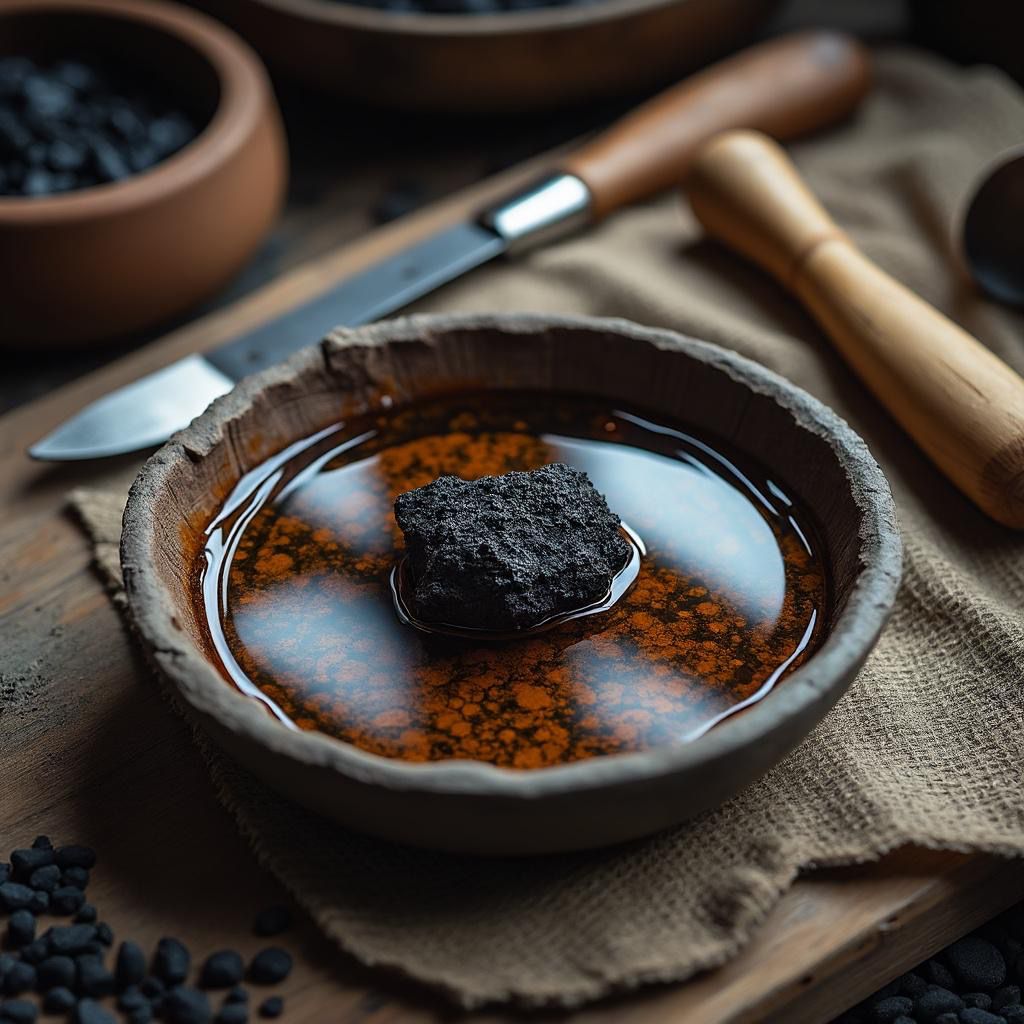
Shilajit processing has a long tradition in the high mountain regions. The knowledge of extraction and processing has been passed down through generations – often within families who have been working at the same sites for decades.
Traditionally, the process begins with small amounts of shilajit being collected by hand. The resin is then steeped in pure spring or glacial water. During this step, it partially dissolves, releasing small particles. It is then carefully filtered to remove coarse impurities such as soil, dust, or larger rock fragments.
This process is repeated until the resin has a uniform, clean structure – without losing its original properties. The goal is not absolute visual perfection, but rather to achieve a natural, clean end product.
In contrast, industrial processes often rely on high temperatures, chemical additives, or very fine filtration techniques to quickly make the resin look flawless. While this speeds up production, it can also alter the character, color, or natural composition.
At Mumio, we prioritize gentle purification using proven methods. The goal is to remove impurities without compromising the authenticity of the resin—this way, the shilajit remains as close to its original form as possible.


Leave a comment
This site is protected by hCaptcha and the hCaptcha Privacy Policy and Terms of Service apply.