
Shilajit is one of the world's longest-used natural products. The history of this resin begins not in a laboratory, but in the rock crevices of high mountains – and in the writings of Ayurvedic medicine, dating back millennia.
Understanding where Shilajit comes from and how it has been used throughout human history also helps one understand why its origin and processing remain crucial quality factors to this day. You can find all the basic information about this in the Shilajit Guide.
What is the history of Shilajit?
Shilajit has been used for over 3,000 years in the Ayurvedic tradition. The oldest written records are found in the Charaka Samhita (approx. 1,000 BCE). In Central Asia, this natural resin is known as Mumijo and has been valued by various cultures as a natural product from the high mountains.
First mentions in Ayurveda
The earliest documented mentions of Shilajit come from the Ayurvedic scriptures of ancient India. The Charaka Samhita and the Sushruta Samhita – two of the fundamental texts of Ayurveda – describe a substance found in the rock crevices of the Himalayas and classified as a so-called Rasayana substance.
In Ayurvedic systematics, the term Rasayana refers to substances believed to have a vitalizing effect. Shilajit was not understood as a cure, but as a natural supplement that supplies the body with minerals. This distinction is important: even today, Mumijo makes no health claims but relies on documented mineral content – particularly manganese, which is proven to contribute to normal energy metabolism.
Discovery by mountain peoples
A widespread tradition tells of shepherds in the high mountain regions of the Himalayas who observed animals consuming naturally exuding resin from rock crevices. This observation led to conscious collection by the local population.
This story is more than legend. It explains why knowledge of finding places and collection methods is still passed down within collector families today – including in Gilgit-Baltistan, the region from which Mumijo sources its Shilajit. One of the founders, Wasseem Wazi, himself comes from the Astore Valley in this region.
Shilajit in the cultural history of Central Asia
The term Mumijo in Eastern Europe
Parallel to its Indian use, a separate tradition of the natural resin developed in Central Asian and later Russian-speaking regions – under the name Mumijo. In Russia, Kazakhstan, and neighboring regions, the resin was part of traditional applications.
The conceptual distinction is geographic-linguistic: Shilajit is the Sanskrit term, Mumijo is the Central Asian term. Both refer to the same natural product. In German-speaking countries, Mumijo is more frequently searched for by native German speakers – an SEO aspect that Mumio deliberately considers in its content.
Why the region of origin shapes history
The history of Shilajit is inextricably linked to geography. The resin does not form everywhere, but only under specific conditions: extreme altitudes, certain rock layers, mineral-rich soils, and seasonal temperature fluctuations.
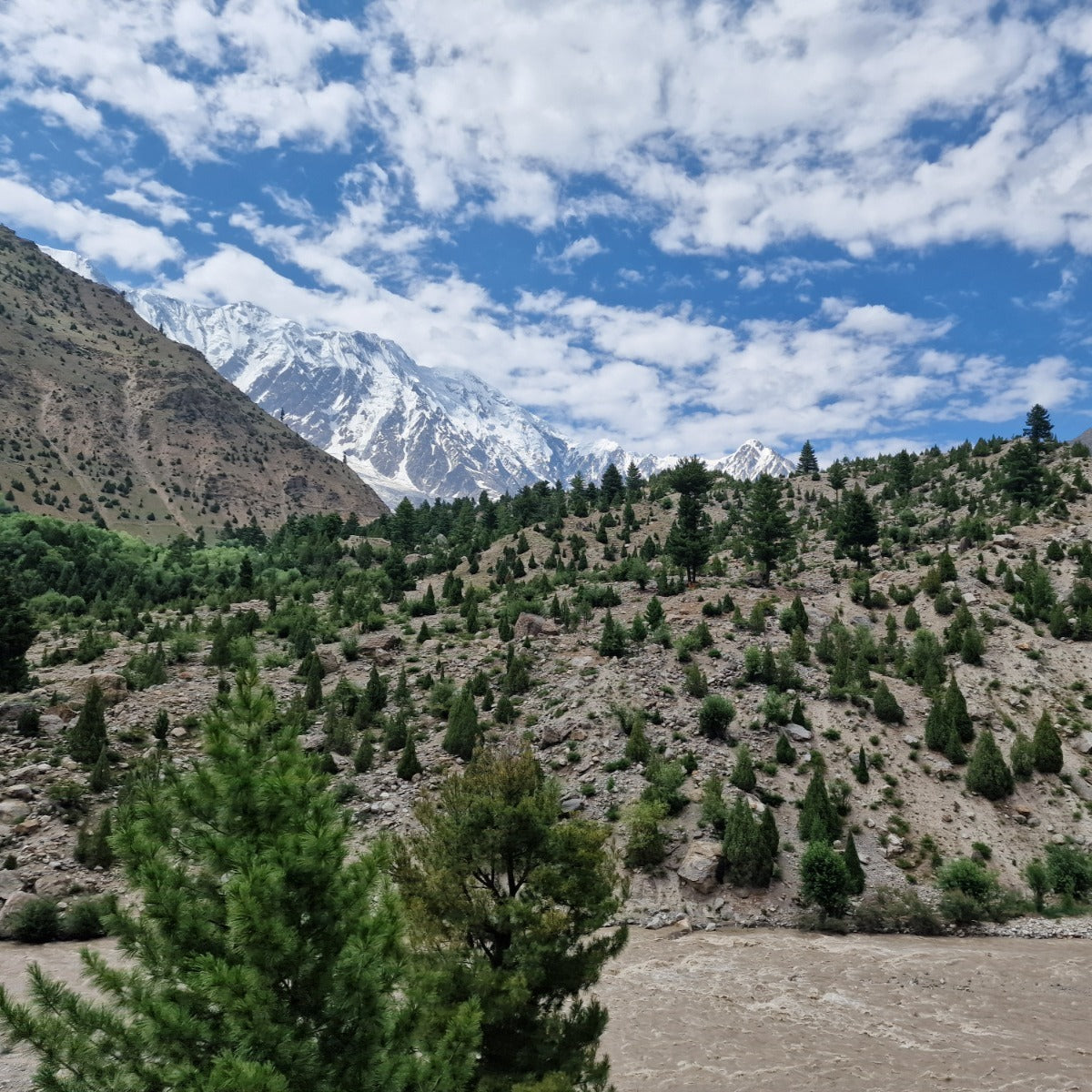
Gilgit-Baltistan in Pakistan is considered one of the most significant regions of origin – geologically and historically. Here, the Himalayas, Karakoram, and Hindu Kush meet. At altitudes above 3,000 meters, Shilajit forms in rock crevices over centuries. The isolation of these areas has contributed to the fact that the resin still occurs today without industrial influences.
Geological Formation – what centuries shape
The history of Shilajit is also a geological one. The resin is formed by the mineralization of plant and microbial residues over very long periods. Under the influence of pressure, heat, cold, and geological processes, organic material condenses into a dark brown to black natural resin.
This formation process takes centuries to millennia. It cannot be accelerated or imitated industrially. What is found in a capsule or a cheap powder product rarely has anything to do with this natural process.
Genuine Shilajit carries the geological history of its region of origin directly within it – in the form of minerals, fulvic acids, and organic compounds that are specific to this genesis.
From Tradition to Swiss Quality Control
What has not changed over millennia: Shilajit must come from verifiable sources and be carefully purified. What has changed: Quality testing is now measurable and documentable.
Mumio combines direct sourcing from Gilgit-Baltistan – with personal access through co-founder Wasseem Wazi – with independent laboratory testing by Biolytix AG in Switzerland. Each batch is tested for heavy metals, microbiological purity, and mineral profile.
You can read more about modern quality assurance here: Shilajit in Ayurveda.
The result: a natural product with historical roots in Gilgit-Baltistan, controlled in Switzerland to the highest standards.
Frequently Asked Questions about the History of Shilajit
When was Shilajit first mentioned?
The earliest written mentions come from the Ayurvedic texts of the Charaka Samhita and Sushruta Samhita – writings dated to approx. 1,000 BCE. In Central Asia, Mumijo has been documented for centuries.
What does "Rasayana" mean in Ayurveda?
Rasayana is an Ayurvedic term for substances and practices intended to support general well-being and vitality. Shilajit is classified as a Rasayana in the Ayurvedic system. Modern products like Mumio make no healing claims, but emphasize the natural mineral content of the resin.
Does historical Mumijo differ from today's Shilajit?
Essentially, no. Both refer to the same mineral natural resin from high mountain regions. What has changed: quality control. Historically, Shilajit was used without laboratory testing. Today, independent analysis – such as that by Biolytix AG in Switzerland – enables an objective quality assessment of each batch.
Why is Gilgit-Baltistan historically significant for Shilajit?
Gilgit-Baltistan is one of the oldest and most renowned regions of origin for high-quality Shilajit. The extreme altitude, mineral-rich rock layers, and the pristine nature of the region have created optimal conditions for its formation over centuries. Mumio sources its Shilajit directly from this region – without intermediaries.
Conclusion
Shilajit has a history spanning over 3,000 years. What was described in Ayurvedic scriptures back then can now be measured and verified through laboratory analyses. Origin from Gilgit-Baltistan, gentle processing, and Swiss quality control – this is the modern answer to an ancient tradition.
If you are looking for Shilajit with genuine origin and tested quality: Buy Shilajit Switzerland.

Leave a comment
This site is protected by hCaptcha and the hCaptcha Privacy Policy and Terms of Service apply.